
Squint Surgery in Kurukshetra — Straighter Eyes, Better Vision, Any Age
Squint — or strabismus — is a misalignment of the eyes that affects both children and adults. Beyond the cosmetic concern, untreated squint in children can permanently damage vision in one eye. The good news: modern squint surgery is safe, effective, and achieves excellent results at any age — for children and adults alike.
Common Myths About Squint — Busted
These misconceptions stop parents from seeking timely help. Here is the truth.
What Is Squint (Strabismus) and Why Does It Happen?
Squint — medically known as strabismus — is a condition where the two eyes do not point in the same direction. One eye may turn inward (esotropia), outward (exotropia), upward (hypertropia), or downward (hypotropia) while the other looks straight ahead.
In normal vision, both eyes work together as a team — sending slightly different images to the brain, which fuses them into a single 3D image. In squint, this teamwork breaks down. The brain, to avoid double vision, begins to suppress or ignore the image from the turned eye. Over time, particularly in children under 8, the suppressed eye loses its visual development — a condition called amblyopia or lazy eye.
This visual loss can become permanent if not treated before the visual system fully matures. This is why early detection and treatment are so important.
Esotropia — Eye turns inward
The most common type. One or both eyes turn toward the nose. Often associated with hyperopia (long-sightedness) in children.
Exotropia — Eye turns outward
One or both eyes turn away from the nose. May be intermittent initially — only appearing when the child is tired, unwell, or looking into the distance.
Hypertropia / Hypotropia — Eye turns vertically
One eye turns upward or downward. Less common. Often associated with nerve palsy or other underlying conditions requiring evaluation.
Intermittent Squint
The squint is only present some of the time — when tired, in bright light, or looking at distance. Still requires treatment before it becomes constant.
What Happens If Squint Is Left Untreated in Children
The visual system in children develops until approximately age 8. Within this window, treatment can restore normal vision. After it, some losses may be permanent.
Amblyopia (Lazy Eye) Develops
The brain begins suppressing the image from the turned eye to avoid double vision. The visual pathways for that eye stop developing normally — causing permanent vision loss called amblyopia.
Permanent Loss of 3D Vision
Stereopsis — the ability to perceive depth in 3D — requires both eyes working together. Untreated squint destroys this permanently. Even if the squint is corrected later, 3D vision may not recover.
Academic & Developmental Impact
Poor vision in one eye affects reading, sport, and coordination. Many children with undetected squint are mislabelled as slow learners when the problem is simply that they cannot see properly.
Self-Confidence and Social Impact
A visible squint affects how children are perceived by peers and how they perceive themselves. Early treatment removes this burden during the most important years of social development.
Limited Window for Full Recovery
The visual system matures by age 7–8. Treatment before this age gives the best chance of full visual recovery. After this window, amblyopia becomes harder — sometimes impossible — to treat.
Early Treatment = Full Recovery
Children treated early — with patching, glasses, and surgery — can achieve completely normal vision and binocular function. The earlier the intervention, the better the outcome.
When should a child first have their eyes checked for squint?
Any squint noticed in a child over 3–4 months of age should be evaluated promptly. For children with a family history of squint, screening at 1–2 years is recommended. All children should have a basic eye check before starting school. If you have any concern about your child's eye alignment at any age — come in. A check-up is quick, painless, and free of anxiety for the child.
How Squint Is Treated — Step by Step
Treatment is tailored to the child's age, the type of squint, and whether amblyopia is present. It often involves a combination of approaches.
Full Eye Examination & Refraction
A complete assessment under cycloplegic drops (which relax the focusing muscles) to determine the exact glasses prescription. Some squints — particularly inward turning in children — are partly or fully corrected by wearing the right glasses alone.
Amblyopia Treatment (Patching)
If one eye has developed amblyopia (lazy eye), the stronger eye is patched for a few hours each day — forcing the brain to use and develop the weaker eye. This is done before surgery to maximise the visual outcome from the operation.
Squint Surgery
Surgery adjusts the length or position of the eye muscles responsible for eye movement — bringing the eyes into alignment. It is performed under general anaesthesia for children and can be done under local anaesthesia for cooperative adults. Most patients go home the same day.
Post-Operative Follow-Up
Regular follow-up checks in the weeks and months after surgery confirm alignment, monitor amblyopia treatment, and allow for any fine-tuning. In some cases, more than one surgery is needed to achieve the ideal result — this is not uncommon and does not indicate failure.
What Happens During Squint Surgery
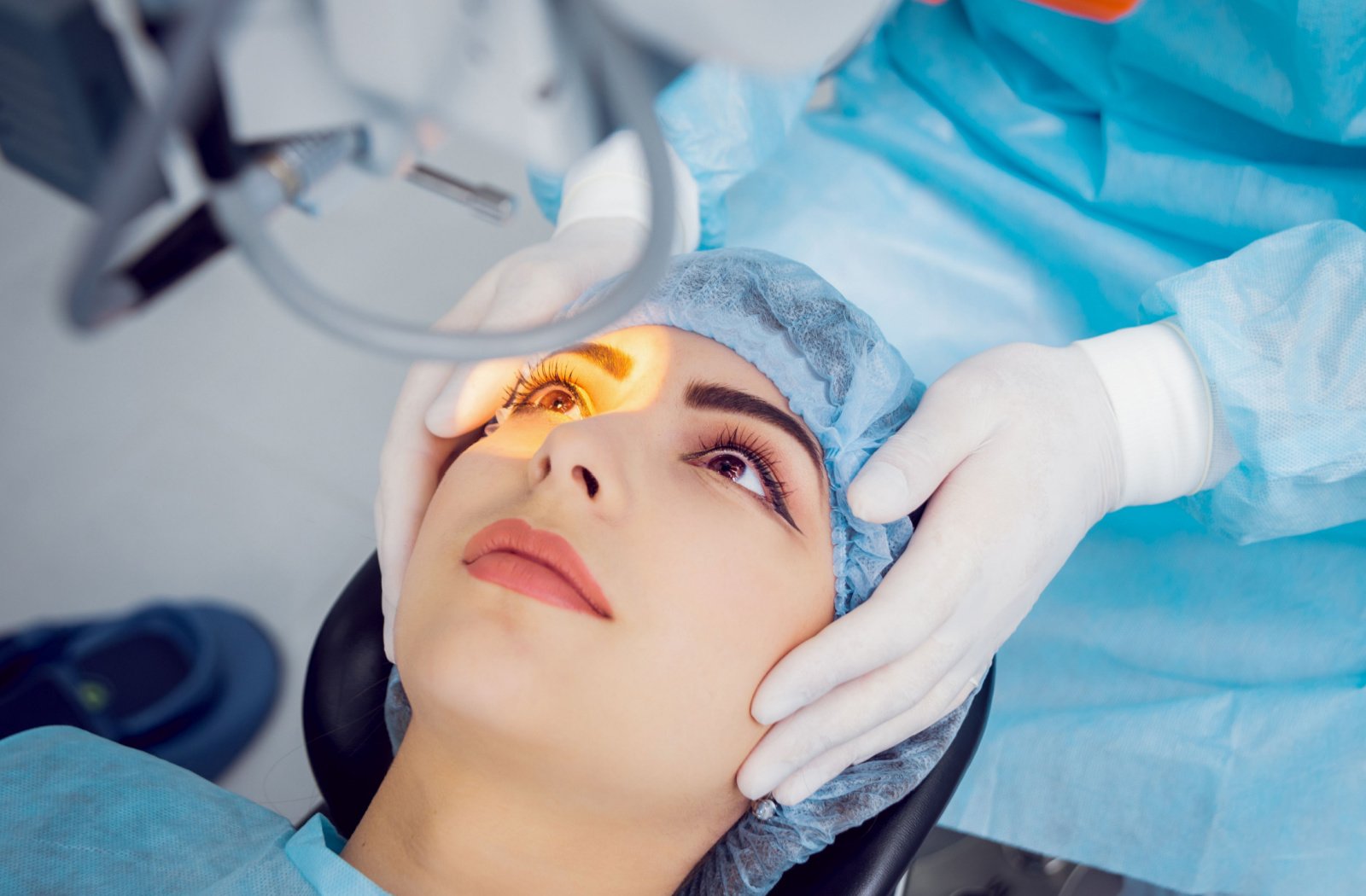
Squint surgery is an extraocular procedure — the eyeball itself is not entered. The surgeon works on the muscles on the outside of the eye. It is safe, effective, and one of the most commonly performed eye surgeries in children worldwide.
General anaesthesia for children. Local anaesthesia or sedation for adults. No pain throughout.
A small opening is made in the thin membrane covering the white of the eye — the conjunctiva. No skin cuts.
The responsible muscle is either weakened (recession — moved further back) or strengthened (resection — shortened). One or both eyes may be operated.
The small opening is closed with dissolving stitches. No eye patch needed. The child goes home the same day in most cases.
Squint Surgery — Quick Facts
Squint Surgery Works for Adults Too
Many adults live with a squint they have had since childhood — sometimes told there is nothing to be done, sometimes never having sought treatment. This is not true. Squint surgery in adults is safe and highly effective. While the brain's visual pathways are fully mature (so amblyopia treatment does not apply), the alignment of the eyes can be corrected at any age — with significant benefits.
Improved Eye Alignment
Surgery corrects the visible misalignment — often the primary reason adults finally seek treatment after years of living with squint.
Better Self-Confidence
The psychological impact of a corrected squint in adults is significant. Patients consistently report improved confidence in social and professional situations.
Relief from Double Vision
Adults who develop squint in later life often experience double vision (diplopia). Surgery can eliminate or significantly reduce this debilitating symptom.
Restored Binocular Function
In some adults — particularly those who had good alignment in childhood — surgery can restore partial binocular vision and depth perception.
Relief from Eye Strain
Adults with intermittent squint often experience significant eye strain and headaches from the effort of keeping their eyes aligned. Surgery eliminates this effort.
Career & Social Benefits
Improved eye contact and appearance opens doors professionally and socially — outcomes consistently reported by adult squint surgery patients.
Squint Surgery — Common Questions
Don't Wait — Straight Eyes and Clear Vision Are Possible
Whether for your child or for yourself — book a squint consultation at Sobti Nursing Home, Kurukshetra. Early treatment gives the best results.